 NextGen
Manufacturing Guides, Tooling Reference & Checklists
Working engineering notes on mould selection, CNC machining tolerances, vibrator table harmonics, concrete mixing ratios, and RFQ preparation. Written by diemakers and production engineers to assist plant supervisors and procurement managers.
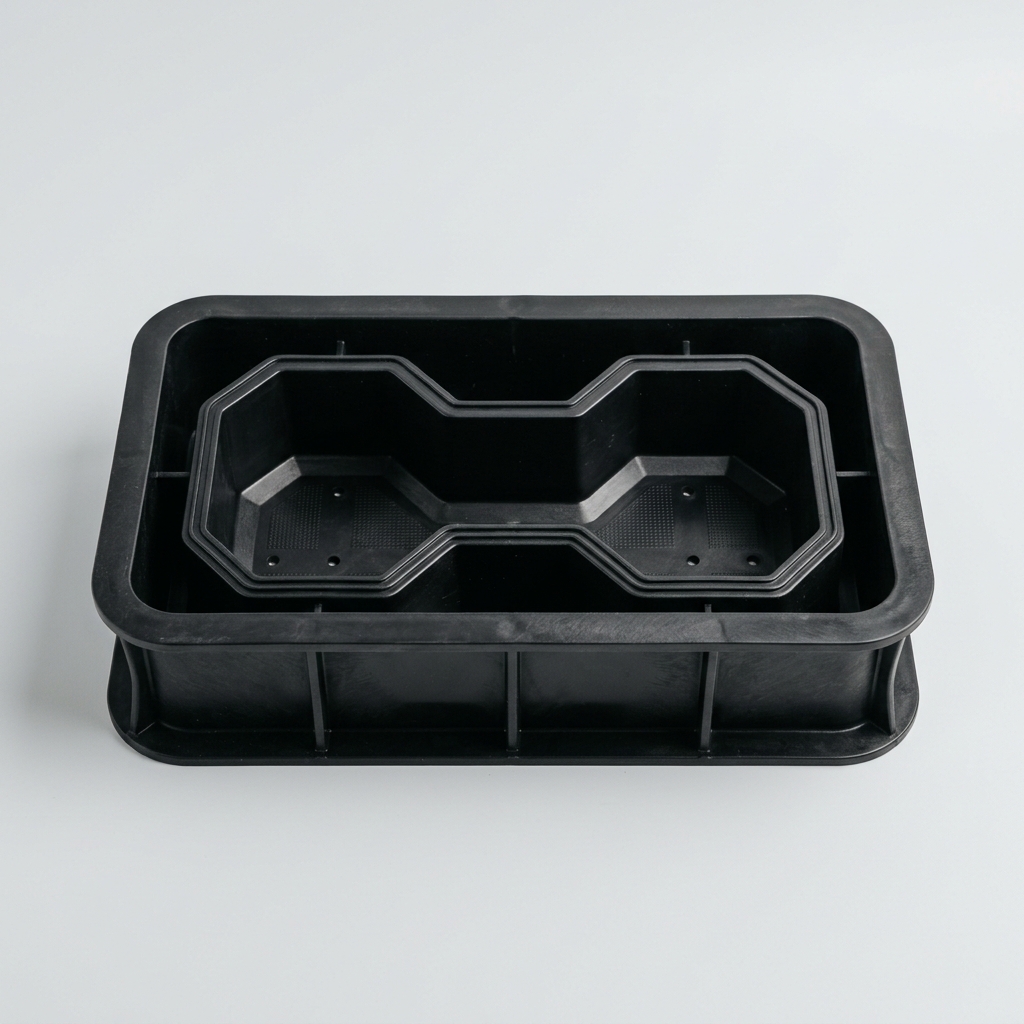
Plastic Mould Selection and Applications: A Demoulding & Wear Analysis
How polymer wall thickness, release draft angles, and raw material purity govern paver block corner crispness and mould longevity on high-frequency vibrator tables.
8 Educational Manufacturing Guides
Detailed operational articles covering the complete tooling and machinery lifecycle:
Plastic Mould Selection and Applications
Selecting between virgin polypropylene and engineering blends, calculating demoulding draft angles, and preventing corner chipping in precast blocks.
Read Technical GuideCNC Machining Fundamentals for Industrial Components
3-axis milling workholding, cutter deflection limits, surface roughness Ra benchmarks, and tolerancing strategies for machine diestock.
Read Technical GuideDesign Considerations for Manufactured Components
Core rules of Design for Manufacturability (DFM): uniform wall thickness, internal corner radius optimization, and avoiding costly deep undercuts.
Read Technical GuideVibrator Table Operation and Applications
Principles of harmonic concrete compaction: calibrating eccentric unbalance weights, tuning spring suspension, and eliminating honeycombing.
Read Technical GuideColor Mixer Machine Selection and Operation
Forced planetary shearing mechanics, iron oxide pigment blending sequences, scraper blade clearance maintenance, and streak elimination.
Read Technical GuideConcrete Mixer Machine Selection and Maintenance
Pan-type vs roller-assisted mixer selection for zero-slump coarse aggregate concrete, gearbox oil management, and bottom wear plate service life.
Read Technical GuideManufacturing Quotation Preparation: The Engineering RFQ
How to prepare an airtight request for quote (RFQ): 2D blueprint callouts, specifying raw material grades, delivery lead times, and freight terms.
Read Technical GuideProduct Customization & Specification Checklists
Comprehensive engineering checklists for plant managers ordering bespoke machinery, non-standard moulds, and specialized hydraulic tooling.
Read Technical GuideEngineering Reference Matrix
Cross-referencing technical disciplines, typical challenges, and corresponding NextGen manufacturing guidelines:
| Guide Focus | Primary Industry | Core Engineering Problem Solved | Key Standard Referenced |
|---|---|---|---|
| Plastic Mould Selection | Precast Concrete Pavers | Preventing block corner fractures & mould deformation | IS 15658 (Concrete Pavers) |
| CNC Machining | Toolroom & Precision Metal | Eliminating cutter chatter & maintaining ±0.02 mm bores | ISO 2768-m (General Tolerances) |
| Component Design (DFM) | Industrial Manufacturing | Reducing unnecessary machining hours & tooling complexity | DIN 16742 / DFM Guidelines |
| Vibrator Tables | Precast & Infrastructure | Eliminating air voids & achieving M-40 block density | ISO 13920 (Weldments) |
| Color Mixer Machines | Designer Tiles & Pavers | Eliminating blotches and streaks in colored wearing layers | Planetary Shearing Standards |
| Concrete Mixers | Construction Yard | Zero-slump coarse aggregate hydration & wear prevention | IS 1791 (Batch Mixers) |
| Quotation Preparation | Procurement & Supply Chain | Airtight RFQs with separated tool, part, and lead times | Commercial RFQ Protocols |
| Customization Checklist | Plant Expansion & OEMs | Preventing missing electrical or footprint specifications | Shop Floor Commissioning |
Resources & Engineering Guidance FAQ
Yes. Every technical guide reflects over 20 years of hands-on diemaking, CNC machining, and heavy mechanical fabrication in our Mayapuri facility. We clearly distinguish general engineering principles from verified NextGen equipment specifications.
Yes. Our engineering desk assists clients with machine placement, matching mixer batch capacities to vibrator table outputs, and sizing electrical power connections for balanced three-phase operation.
Certainly. If your plant is experiencing unusual mould wear, demoulding fractures, or mechanical vibration resonance, contact us with photos and drawings for direct diemaker recommendations.